
A series of beta-pinene mixtures across a range of enantiomeric ratios was measured, with ROA peak intensities inverting between the two enantiomers.
Beta-Pinene — Enantiomeric Excess
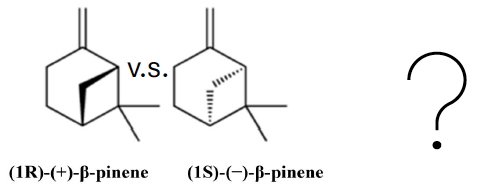
Customer question: I have a mixture of enantiomers — what is the ratio?
- Enantiomeric excess (EE) determination
- Typical examples — small molecules with more than two chiral centres
Why come to Enantios?
- Not enough differentiation with chiral HPLC
- Reference standards cannot be synthesized, and HPLC requires them
- A faster, lower-cost solution is needed
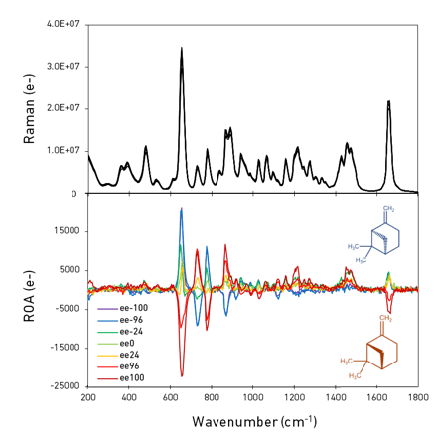
Results
Request the full application note
Get the complete study, including spectra and method detail, from our team.